Why buyers import packaging from India
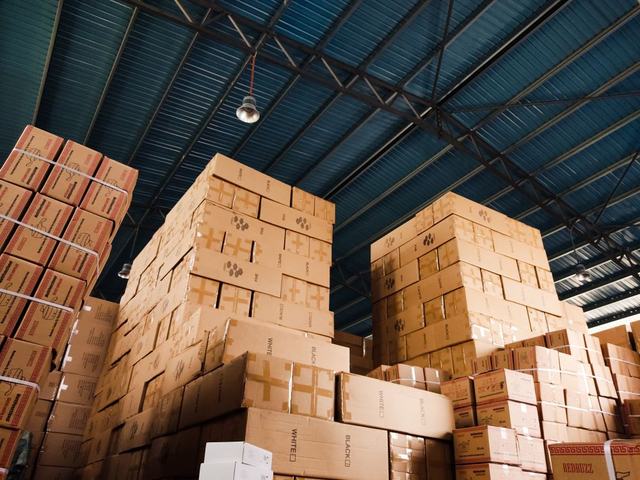
Importers in the GCC, Africa, Europe, the UK, the USA and Australia increasingly look to India when they need paper packaging. There are three practical reasons.
- Competitive conversion costs. Labour, factory overheads and finishing work such as printing, die-cutting and hand assembly are generally more affordable in India than in many destination markets. For labour-intensive items like rigid gift boxes or handled paper bags, the difference can be significant.
- Local paper and board supply. India has a large domestic paper industry producing kraft liner, fluting medium, duplex and SBS board, and food-grade cupstock. A converter with nearby mills can usually source the right grades without long import lead times.
- Regulation is pushing demand towards paper. Restrictions on single-use plastics in India, the EU, the UK, parts of the GCC, many African countries and Australian states have moved brands towards paper bags, paper straws, moulded fibre and paper-based protective packaging. Indian manufacturers have scaled up to meet this demand.
Sourcing from abroad still requires care. The rest of this guide explains how to reduce risk and get predictable results from a paper packaging supplier in India.
How to brief a packaging supplier
A good brief is the single biggest factor in getting an accurate quote quickly. Vague requests lead to vague prices and, later, to boxes that do not fit or do not survive the journey. Include the following:
- Product type. For example, a regular slotted carton, a mailer box, a flat-bottom paper bag with twisted handles, a folding carton or a double-wall paper cup.
- Dimensions. State whether you are giving internal or external dimensions, in millimetres, in the order length x width x height. Internal dimensions are the safer choice because they describe the space your product needs.
- What goes inside. The weight of the packed contents, whether it is fragile, liquid, frozen, oily or sharp-edged, and how many units go in each box.
- Quantity. Your first order quantity and expected annual volume. Unit price usually falls as quantity rises because setup costs for plates, dies and machine changeovers are spread across more units.
- Printing and finish. Number of colours, print method if you know it (flexo, offset or digital), coverage, Pantone references, and any lamination, varnish, foil or embossing. Send artwork in vector format if it is ready.
- Destination and shipping. Destination country and port or city, preferred Incoterm, and whether the goods will be stored in a humid warehouse or sent on long sea routes.
- Compliance needs. Food contact, FSC chain-of-custody claims, recyclability statements or retailer specifications.
Samples and approval
Never skip the sample stage for a new item. A sample confirms size, strength, print quality and how your product actually sits in the pack.
There are usually two kinds. A plain or structural sample confirms dimensions and board grade, and is quick to make. A printed pre-production sample confirms colours and finish, and may involve plate or die costs. Agree upfront whether these costs are charged separately or adjusted against the bulk order.
When the sample arrives, test it the way it will be used: pack it with real product, stack it, drop it, and leave it in your warehouse conditions for a few days. Write down any change you need and get a revised sample if the change is significant. Once you are happy, sign off the sample and keep one approved reference piece. That reference becomes the standard for bulk production and for any later dispute.
Incoterms explained: EXW, FOB, CIF and DDP
Incoterms are standard trade terms published by the International Chamber of Commerce. They define who pays for transport, who handles customs, and where risk passes from seller to buyer. The four you will meet most often when you import packaging from India are summarised below (Incoterms 2020).
| Incoterm | Seller pays for | Buyer pays for | Risk passes to buyer |
|---|---|---|---|
| EXW (Ex Works) | Making goods available at the factory | Loading, inland transport, export clearance, freight, insurance, import duties and delivery | At the seller's premises |
| FOB (Free On Board) | Inland transport, export clearance and loading on the vessel at the port of shipment | Ocean freight, insurance, import clearance, duties and delivery | When goods are on board the vessel |
| CIF (Cost, Insurance and Freight) | Everything under FOB plus ocean freight and minimum cargo insurance to the destination port | Unloading costs not in the freight, import clearance, duties and delivery | When goods are on board the vessel at origin |
| DDP (Delivered Duty Paid) | Everything up to delivery at your named address, including import duties and taxes | Unloading at your premises | At the named destination |
A few practical notes. EXW from India is rarely convenient for overseas buyers because the buyer must handle Indian export formalities. FOB suits importers who have their own freight forwarder and negotiated rates. CIF is simple for first-time importers, but remember that risk passes at origin and the minimum insurance cover may be limited, so check the policy. DDP is the most hands-off option, though the price will include the supplier's estimate of duties and local charges. Strictly, the ICC recommends FCA and CIP for containerised cargo, but FOB and CIF remain widely used in practice.
Export documents you should expect
Paper packaging is a straightforward export product, and the documentation is usually simple. Expect the following:
- Commercial invoice showing the buyer, seller, description of goods, quantity, unit price, total value and Incoterm.
- Packing list detailing the number of pallets or cartons, contents of each, and net and gross weights and volumes.
- Certificate of origin confirming the goods were made in India. A preferential certificate may reduce import duty where a trade agreement applies between India and your country, so ask your customs broker whether one is useful.
- Bill of lading for sea freight (or an air waybill for air shipments), issued by the carrier as a receipt and, for an original bill, a document of title.
- Insurance certificate where the seller arranges insurance, as under CIF.
Phytosanitary certificates are not usually needed for finished paper packaging, because processed paper and board are not considered a plant health risk in the same way as raw plant material. Requirements can vary by country and product, so confirm with your broker if in doubt.
ISPM-15 is the international standard for wood packaging material. It applies to solid wooden pallets and crates, which must be heat-treated or fumigated and marked. It does not apply to the paper packaging itself. If goods are shipped on paper or corrugated pallets, or floor-loaded with no pallets, ISPM-15 does not come into play at all.
Container loading: 20ft, 40ft and 40ft high cube
Most packaging is light for its volume, so container space rather than weight is usually the limit. Typical internal volumes are approximately 33 cubic metres for a 20ft container, 67 for a 40ft and 76 for a 40ft high cube.
| Container | Approximate volume | Typically suits |
|---|---|---|
| 20ft standard | About 33 cbm | Trial orders, mixed product orders, dense items such as paper sacks or rolls |
| 40ft standard | About 67 cbm | Regular replenishment orders of boxes or bags |
| 40ft high cube | About 76 cbm | Bulky, light items such as cups, bowls and assembled boxes |
Palletised or floor-loaded? Palletised loads are faster to unload with a forklift and suffer less handling damage, but pallets take up space. Floor loading fits more product into the container but takes longer to unload by hand. Many buyers floor-load to keep freight cost per unit down and palletise only when their warehouse requires it.
Flat-packed boxes ship efficiently. Corrugated cartons, mailers and folding cartons are supplied flat and assembled at the destination, which allows far more units per container than pre-assembled packaging. Nested items such as cups and bowls also pack well. Rigid boxes are the exception: they ship assembled, so they take up more space.
What affects lead time
Lead times vary by product and season, so ask for a specific timeline with your quote. The main factors are:
- Whether new printing plates, cutting dies or moulds are needed.
- Paper and board availability, especially for special grades, food-grade stock or FSC-certified material.
- Complexity of finishing, such as lamination, foil, handles or manual assembly.
- Sample approval time on your side. Delayed feedback is one of the most common causes of late shipments.
- Factory workload and holiday periods in India.
- Vessel schedules, transhipment and port congestion, which add transit time after the goods leave the factory.
Quality checks before shipment
Agree the quality standard before production starts and check against it before the container is loaded. Useful checks include:
- Dimensions against the approved sample and specification.
- Board grade, GSM and, for corrugated boxes, bursting strength or edge crush values.
- Print registration, colour match against approved proofs, and legibility of barcodes.
- Glue joints, stitching, handle strength and folding accuracy.
- Moisture content of board, which affects strength on long sea voyages.
- Carton marking, counts per bundle and pallet stability.
Ask for photographs and videos of finished goods and loading. For larger orders, many buyers appoint an independent inspection agency to carry out a pre-shipment inspection using a sampling plan such as AQL.
Importer's checklist
- Write a full brief: product type, internal dimensions, contents and weight, quantity, print and destination.
- Compare quotes on the same specification and Incoterm.
- Request and test samples with your real product.
- Sign off an approved reference sample and artwork proof.
- Confirm the Incoterm, who arranges freight and who insures the goods.
- Agree the quality criteria and how pre-shipment checks will be done.
- Confirm container size, loading method and pallet type.
- Review draft documents (invoice, packing list, certificate of origin) before the vessel sails.
- Plan unloading and storage at the destination, keeping paper goods dry.
Working with OXY PACK GLOBAL
OXY PACK GLOBAL is a paper packaging manufacturer and exporter founded in 2017 in Rajkot, Gujarat. We make 100% paper packaging, including corrugated boxes, paper bags and sacks, printed cartons and gift boxes, food service packaging and paper protective packaging, and we export to more than 20 countries across Africa, the Middle East, Europe, the Americas and Asia-Pacific. We are ISO 9001 certified, use FSC®-certified paper, are an IEC-registered exporter, ship on FOB, CIF or DDP terms and provide samples before bulk production.
Get a quote
Send us your product type, dimensions, quantity, print requirements and destination using the form on this page. We reply to every enquiry within one business day with questions, suggestions or a quotation.